
The Community
Village Walls:
I also learned something deeply inspiring: on the walls of the village, locals themselves write messages in Kannada about the health benefits of eating green leafy vegetables. It isn’t just decoration—it’s community-driven awareness.
With nearly 57% of women in India being anemic, these simple, hand-painted reminders become powerful tools. They encourage families, especially women, to include more iron-rich greens in their daily meals—something their own herbal gardens make accessible and affordable.
It showed me that change doesn’t always come from outside; often, it’s the villagers who are already educating, empowering, and taking care of one another in ways that are culturally rooted and deeply effective.

Herbal gardens:
Through Project Jardh, I learned that many villagers already cultivate herbal and nutritional gardens in their own homes. Almost every household grows a mix of vegetables—bitter gourd, pumpkin, bottle gourd, tomatoes, brinjal—and medicinal plants like tulsi.
What struck me most was how sustainable their system already is. They use compost pits made entirely from kitchen waste, avoiding chemicals and keeping their gardens fully organic. They also understand the health benefits of the vegetables they grow, which makes the garden not just a food source but part of their well-being.
I also learned how thoughtfully they manage water: the normal tap water flows into a soak pit, naturally improving groundwater levels over time. That same recharged groundwater then supports the garden, creating a quiet, self-sustaining cycle.
Seeing this taught me that meaningful environmental solutions already exist within our villages—they just need visibility, support, and scaling.

Village school:
The village also has its own school, and one of the most meaningful initiatives we took was painting its walls, in collaboration with a local NGO. What started as a simple beautification project became a way to bring culture, inspiration, and imagination into the everyday lives of the children.
The walls now carry visual stories from ancient Indian epics like the Ramayana and Mahabharata—scenes of courage, wisdom, and resilience that the children instantly connect with. Alongside these, we painted motivation boards featuring different career paths, from scientists and doctors to artists and environmental stewards, so that every child who walks in sees a world of possibilities.
It felt like a small intervention, but it turned the school into a space where heritage and aspiration meet, reminding the children of where they come from and how far they can go.

Water Wheels
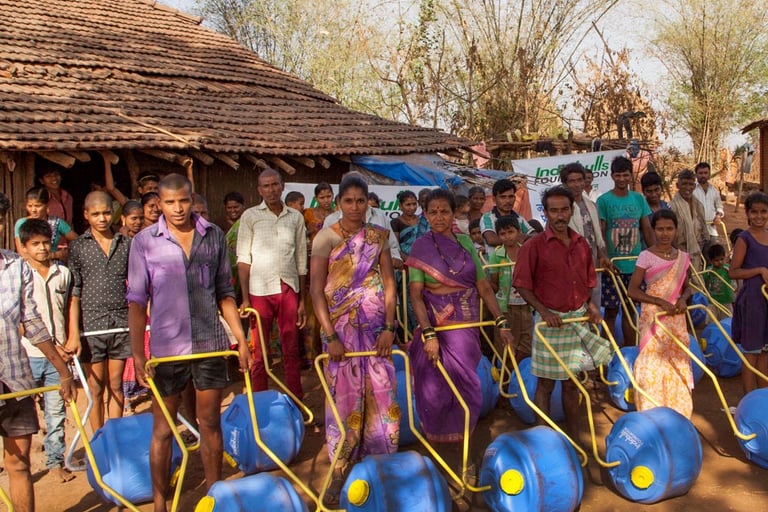
Another thing we worked on in the village was building water wheels to help women carry water from wells or other sources back to their homes. Before this, most women had to carry heavy pots on their heads—sometimes making multiple trips a day just for basic tasks like washing vessels, cooking, or cleaning. Apart from the physical strain, it also took a lot of time, especially for households located farther from the water point.
The water wheel made the process much easier and faster. Instead of lifting the entire weight, women could simply roll the wheel back home, reducing pressure on their necks and backs. It also allowed them to carry more water in one trip, which meant fewer journeys and more time for other work or rest.
What felt like a small engineering fix ended up making a noticeable difference in their daily routine, turning a physically exhausting chore into something far more manageable.
Connect With Us
© 2025. All rights reserved.


projectjardh@gmail.com